Tuesday, May 13, 2014

Solar Power for the High Tunnel

It all started with the posts to hold the panels: sunk three feet underground with concrete.
I needed power to open and close the louvers of the high tunnel.  Moreover, power was needed to run the blower that provides a layer of air between the two plastic layers - making the tunnel better to withstand the wind. Kamal designed a structure to make it all work.

Circuit breaker panel in the high tunnel
Digging the trench, threading the wire from the panel into the high tunnel and now connecting the circuits. 

Blower inflating the plastic

Here's the backside of the high tunnel with power!
Solar panels with batteries

Sunday, April 13, 2014

High Tunnnel Is Up Just in Time

High Tunnel on a warm day
Thanks to the Brooks School for their help and hearty welcome!

I was running out of room upstairs in our home for more seed starts.  Thank goodness, the high tunnel was completed just as I needed it.   
In the hallway are the trays needing cooler temperatures and/or dark to germinate.

In the TV room, our cat Lidea makes sure the summer crops germinate on time.  (My towel for quick clean up that also doubles as a knee pad is comfy for the cat.) 


So far, spinach, peas, scallions and purple onions are planted in the high tunnel.
Using some cardboard and leaf-mold for mulch in between the beds.

Wednesday, February 26, 2014

First Sprouting of 2014


On Saturday, I started the first seeding of the season.  February is the time to plant onions, leeks and scallions from seeds.  They will be transplanted into the field in May. 


Leeks, onions and scallions on a heating mat with a humidity dome to help sprouting
Using a temperature controller, I get within the optimal temperature range for germination. 

temperature controller for the heating mats

The scallions came up first.
Scallions sprouting

Now is the time to remove the dome, heating mat and turn on the overhead lights. 
Leeks barely visible
Onions


  Meanwhile, the leeks and onions need a couple more days of heat and humidity.


Wednesday, December 18, 2013

Bobbin Farm Breaks New Ground for 2014

Bobbin Farm is expanding and breaking new ground at our new location.  We are leasing land from the Brooks School.  The former lawn has become a field of winter rye planted in early September to nourish the soil.
Foreground shows the pad for a high tunnel with the field beyond.
Today, after two sizable snowstorms, the frame of the high tunnel was erected.  Early spring or during a January/February thaw, it will be completed.
Walking down the unpaved road towards the field
The house in the sun. 
Been plenty busy in this "off" season.

Wednesday, October 2, 2013

Could Not Do This without Help

As the farm season is coming to a close, I extend my thanks to those who helped me out this season.

Gorgeous CSA boxes with lovely bouquets are due to Natasha's help.  Along the way, she planted, weeded, tied tomatoes and delivered.  Now, she returns to her illustration and design work.  She is missed.

Natasha gathering sunflowers for bouquets for shares.

Kamal does the grunt work, running and fixing the machines and guides me through business planning.  His requests for precision and clear directions from me (the-tangent-laden-big-picture-gal) are generally not met.  Poor guy!
Kamal digging French Fingerling potatoes.


Many thanks. 

Wednesday, September 25, 2013

End of the Season Chores

Here are some of the fun things that I have been doing to clean up and to prepare for next year.
Pulling the stakes, drip line irrigation and twine from the tomatoes.
Taking down the tomatoes reminds me of the feelings that I had as a kid when we took down the Christmas tree.  You don't like doing it but you have to: carefully placing the ornaments in their boxes, unraveling the garland, getting as much of the silvery icicles off the tree so that it can be chipped and coiling the lights.  Nothing said the holidays were over better than this task and our family used to do this on New Years' Day.  For me, nothing says the farm season is nearly done better than taking down the tomatoes.
All the twine used to trellis the tomatoes.
Rinsing the stakes off, dipping them in a weak bleach solution and letting them dry.
Stacking the stakes in the car. 


Bringing these six-foot stakes between the buildings, through the back yard to be stacked here. 
The plowed field being readied for cover cropping.
An example of another part of the field cover cropped with Winter Rye.

Tuesday, August 13, 2013

Knowing When to Let Go

Anyone who knows me well knows that I am wicked stubborn.  Ask my family.  This week was a test to my tenacity.  

As each week this season brought pounding rain to the farm, many of the plants succumbed to disease.  Do I try to nurture the plants along?  Hoping for some yield, if reduced, and all the while allowing the disease to spread?  In the organic growers' toolbox, there's few options to protect against plant disease - especially fungal diseases in this very wet year.  
Cantaloupe with powdery mildew as the leaves die, the weeds take over.   
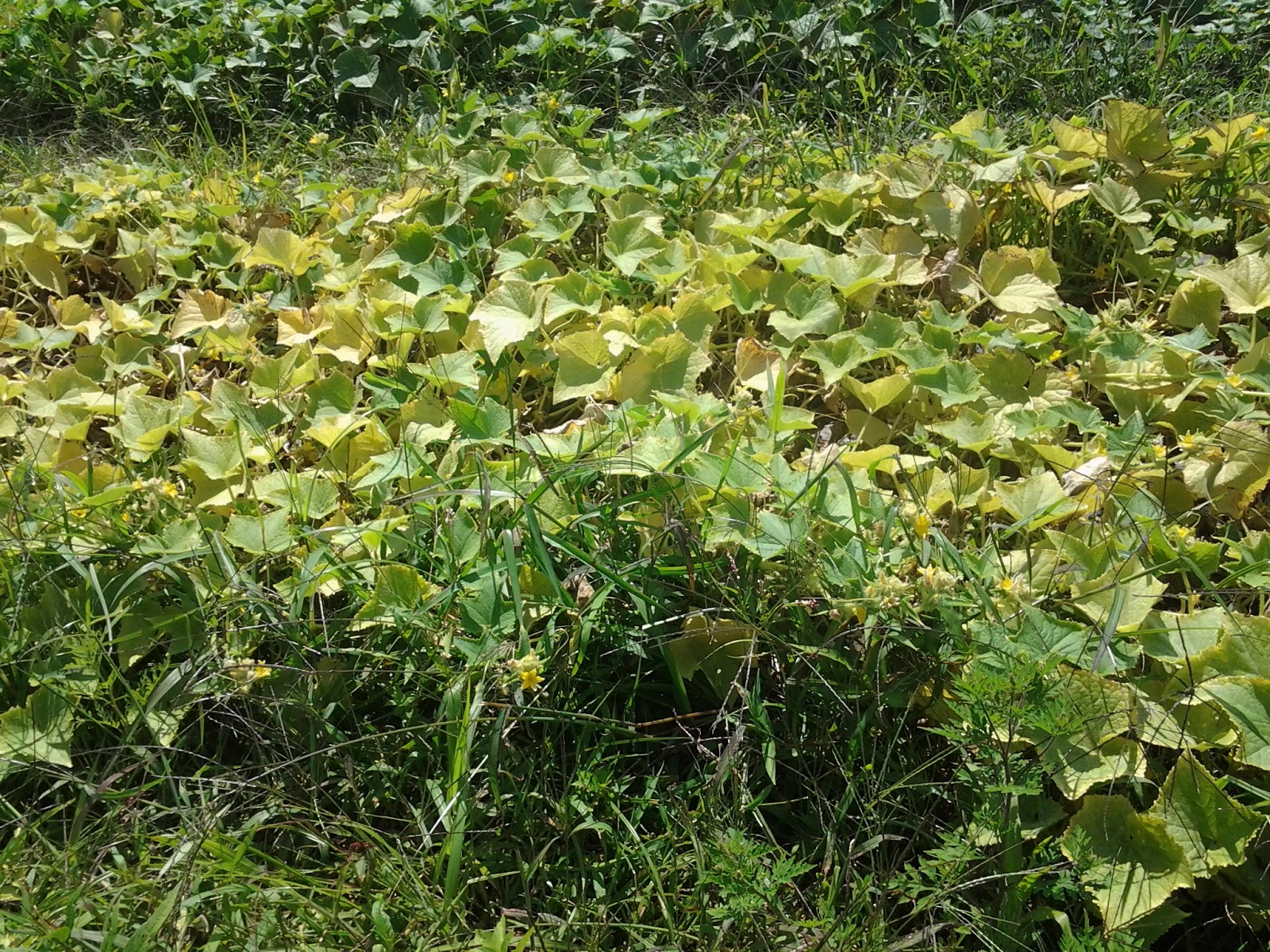
Lemon cucumbers try to keep producing.
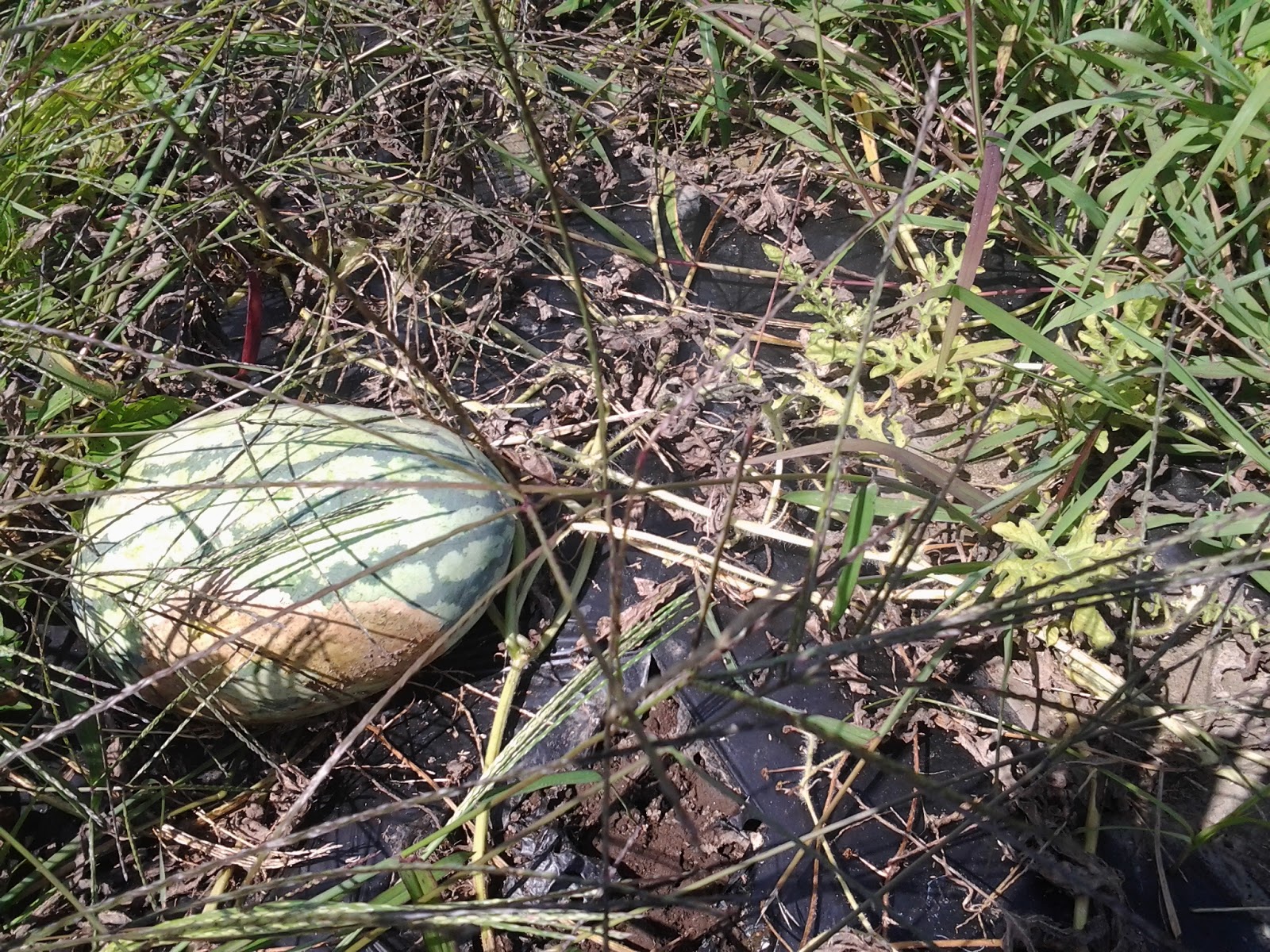
Here's watermelon with the foliage dead it has no way to ripen.
Within the last week all the big plant diseases have visited our farm (In our county, Late Blight for tomatoes and potatoes has been spotted). While trying to save my winter squash and my late planting of more cucumbers and summer squash, I asked my farm manager to harrow in five planting beds. 
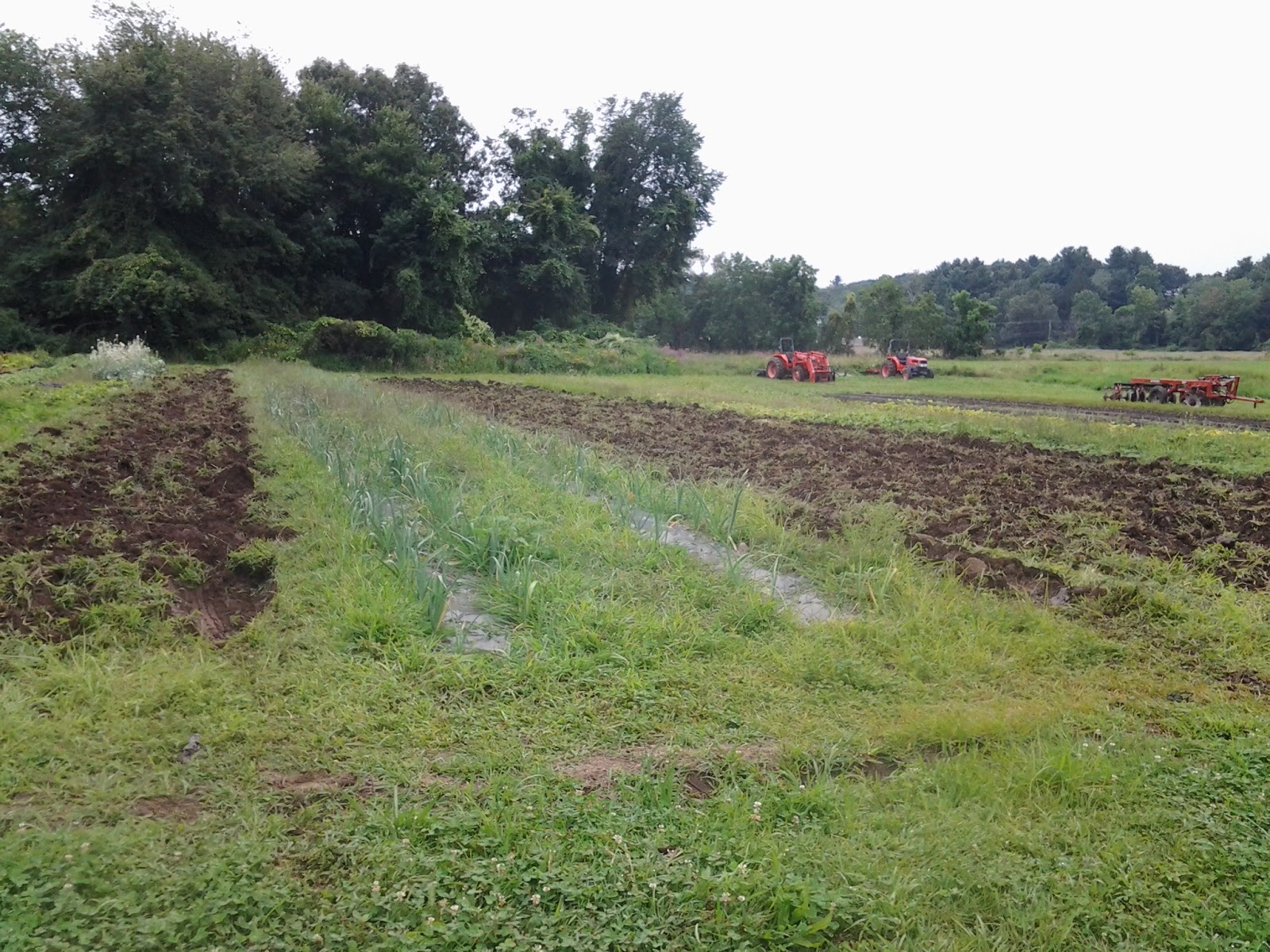
Gone are the cantaloupe, watermelons and cucumbers.
When the fruit won't have a chance to ripen and before the disease takes hold in new plantings, it seemed the right time to let go of a few crops.